The High-Impact Guide to Safety Uniforms and Mannequins: A Visual Merchandising Masterclass
In the safety and workwear industry, your showroom is far more than a simple retail space; it is a live proof-of-concept environment. As a Safety Store Manager, your primary mission is to transform a standard display into a powerful demonstration of life-saving functionality. You aren't just selling cloth; you are selling the promise of protection. To do this effectively in the booming industrial landscape of Saudi Arabia, your choice of Mannequin and its material composition—specifically high-grade Fiberglass—becomes a strategic asset in your brand's arsenal.
This guide provides a deep dive into how you can use technical display strategies to move beyond the "static hanger" approach and create high-conversion environments that resonate with safety officers and procurement leaders alike.
The Action-Response Strategy: Triggering Mental Simulation
In the industrial world, a safety uniform is a tool. If you place a high-visibility, flame-retardant coverall on a stiff, upright display, you are effectively hiding the garment’s engineering. To trigger "mental simulation"—where a customer subconsciously imagines the gear in action—your Mannequin fleet must mimic the dynamic movement of the job site.
Dynamic Posing for Safety Gear
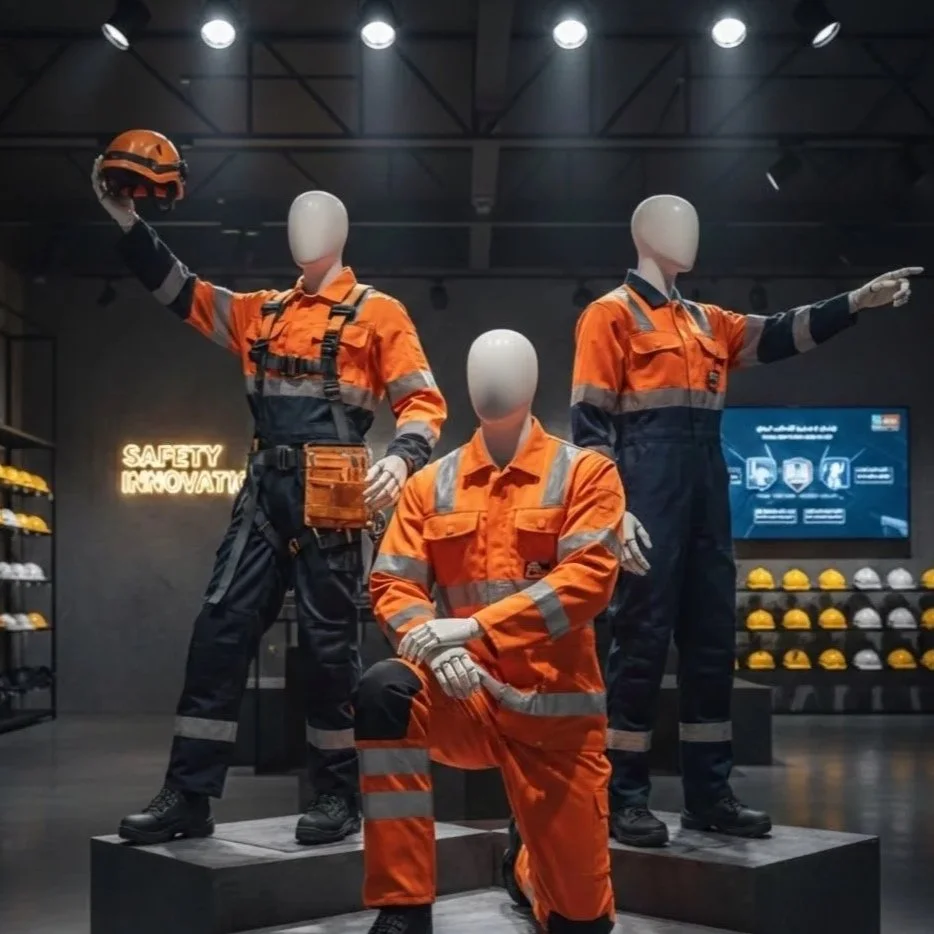
The Reaching Stance: Use forms with arms extended or raised. This demonstrates the "reach" and flexibility of the uniform, proving that the underarm seams won't rip during overhead tasks—a major concern for construction leads.
The Kneeling Action: Placing a model in a kneeling position highlights reinforced knee pads and the durability of the fabric under tension. It shows that the garment supports the worker in their most common physical states.
The Dynamic Stride: A walking pose suggests a supervisor on the move, allowing the fabric to ripple and show off the 360-degree visibility of reflective strips.
Why Fiberglass is the Non-Negotiable Standard for PPE
As a Safety Store Manager, you are responsible for the longevity of your display assets. In an industrial showroom, your displays carry heavy, weighted gear—oxygen tanks, thick leather welding aprons, and steel-toed boots.
Material Durability and Risk Mitigation:
Structural Load Capacity: Cheap plastic forms often buckle or lean under the weight of full PPE. Fiberglass provides the internal structural rigidity required to remain perfectly balanced while carrying 10kg+ of equipment.
Heat and Chemical Resistance: In the high-ambient temperatures of Saudi Arabia, plastic can become brittle and warp. Fiberglass is chemically inert and thermally stable, ensuring your display remains pristine even when placed near high-intensity retail lighting or glass windows.
The "Pristine Finish" Factor: Industrial buyers associate clean, sharp displays with precision. Fiberglass is resistant to scratches and chips, allowing you to maintain a professional brand image during frequent garment changes.
Read our technical breakdown on [Top 5 Reasons Fiberglass Mannequins Are Perfect for Saudi Retailers]
The "Eye-Level" Authority Strategy
Psychologically, safety is about authority. When you position your primary safety uniforms at the viewer's eye level, you are creating a peer-to-peer connection that demands respect.
Highlight the "Critical Zone": The chest and head area are where safety gear often features its most critical specs—ID badges, radio loops, and helmet attachments.
Directing the Gaze: Use a mannequin with a slight head turn (15 to 20 degrees) to lead the customer’s eye toward your "New Arrivals" or "Compliance Standards" signage.
Vertical Hierarchy: Place your premium, high-spec gear on elevated plinths. This not only protects the garment from floor dust but also signals that this specific product is the "pinnacle" of your safety range.
Regional Nuance: Modest Workwear Requirements in Saudi Arabia
The Saudi market has specific requirements for garment draping, especially concerning modest fashion and traditional integration in the workplace.
Tailored Draping for the Region
Volume and Silhouette: Many safety uniforms in the region are designed with a more generous cut to be worn over traditional attire or to adhere to modesty standards. A Fiberglass mannequin with realistic anatomical proportions ensures that these larger silhouettes do not look "baggy" or "unprofessional" but instead look "purposefully tailored."
Fabric Weight Management: Traditional Abaya-style safety coats or extended tunics require a mannequin that can handle the "hang" of extra fabric without the form disappearing inside the garment.
Minimizing Cognitive Load: The "Rule of Three"
A cluttered floor is a confusing floor. If you have too many displays shouting for attention, the customer hears nothing. To keep the VM layout clean and focused:
Group by Sector: Create distinct "islands" for different industries—Oil & Gas, Construction, and Medical.
The odd-number rule: Grouping three mannequins together (one kneeling, one standing, one walking) creates a narrative of a full "work crew." This is easier for the human brain to process than a long, straight line of identical forms.
Conclusion: Investing in Your Silent Safety Officers
Your Mannequin fleet is the silent heartbeat of your showroom. By choosing high-performance Fiberglass displays and implementing dynamic, eye-level positioning, you are proving to your customers that you understand the rigors of the job site. In Saudi Arabia, where the industrial sector moves at lightning speed, your visual presentation must be as durable and reliable as the uniforms you sell.
Don't let a weak display be the reason you lose a high-value contract. Build a showroom that speaks the language of safety and professional excellence.
